
Two articles this week startled me, forced a reckoning, much like a FedEx driver showing up suddenly at the window in the darkness once forced me into calculating an improvised response.
One was an article in The Guardian: Out of the ruins: will Aleppo ever be Rebuilt? by Ghaith Abdul-Ahad. A beautiful read, it includes this passage: “More than any other city in the Middle East, Aleppo managed to preserve its historical identity into modern times, not only by safeguarding old buildings and artefacts, but in maintaining the Old City as a living economic and social organism, where traditional crafts were still practised in the old workshops. The Old City and its famous al-Madina souk – the largest covered market in the world – remained at the heart of the city’s entrepreneurial life, clustered around its ancient khans.”
I walked those streets. I remember them well, the stalls and workshops of al-Madina, the way the ancient walkways sometimes descended slightly, the old crafts and the covered aisles, the artifacts and embroidered clothes. No cheap Chinese goods on offer, no plastic neon figurines. That souk remains etched into my memory, a sensory and cultural treasure against which all other souks I ever saw somehow paled, no matter how grand.
Gone now.
Along with the homes of millions.
A few of those millions I met when they arrived as refugees in Germany in 2016, fleeing a grotesque war by foot and boat and making their months-long paths overland to find themselves in bare makeshift temporary buildings on the edge of the northern town near where I lived.
There is so much talk of “healing trauma” in the circles of Western nations’ psychologies. But what about this trauma?
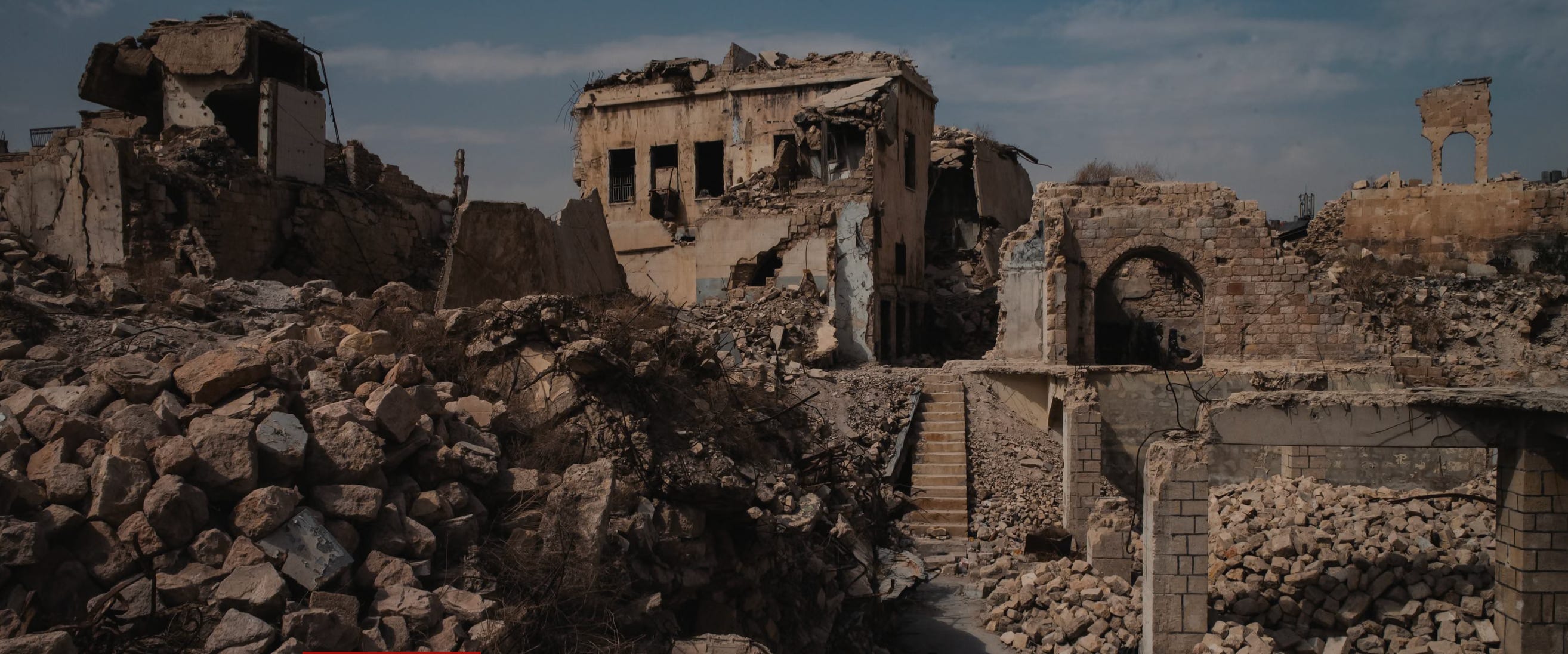
The other article was a report in world news that Rifaat al-Assad (the first dictator’s brother) known as the ‘butcher of Hama’ finally died. There had been Muslim Brotherhood-led uprisings in Aleppo in 1979 and 1980. And his government-led siege on the uprising in the neighboring city Hama in February 1982 lasted almost a month and resulted in up to 40,000 deaths and 17,000 disappearances. In 1985, when I arrived in Aleppo, grief and gnawing paranoia lay thick on everyone to whom I spoke. I haven’t thought about him in years. Such is my privilege.
But because of these reports, I am suddenly back there, listening to my friends’ laughter and dreams, knocking the dust off of my shoes as I lay them aside to enter a home, intuiting their wariness of whether they could trust me at all.
When I last wrote here, I was in Turkey in 1985. I had rented a car for a few weeks and driven down the coast. I had made friends and had learned as much as I could about Turkey’s then political and social life. I was anticipating Syria, readying my backpack for a long bus ride.
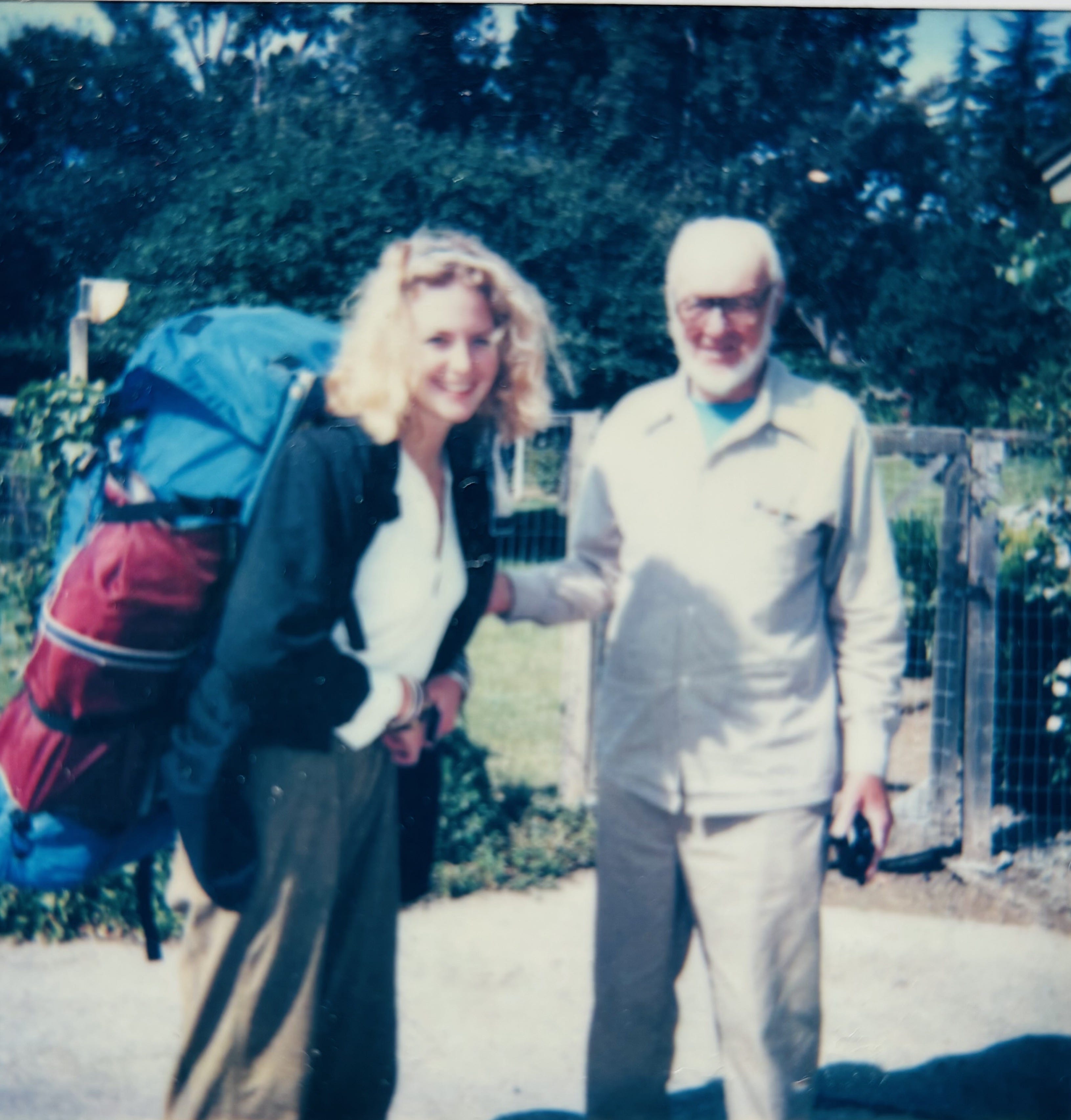
Just for fun, I include a picture of my backpack above, as I was departing California four months before. I had packed for every season, and for going around the world, time of return unknown. Medicine. Extra clothes. Sleeping bag. Emergency supplies. AND I carried a portable typewriter with me everywhere.
Rule Number 3 of traveling alone:
Ask directions often and then walk with resolve. Look like you know where you are going.
Enroute, Turkey. Leaving Antalya, Murat from the pensiyon drove me to the bus station. He said: “If only all Americans were as nice as you,” then wished me good journeys and happy days. Waiting in line to board, we talked for a while, then kissed on our cheeks goodbye. He stood by the side under my window and put his hands together in prayer that no one would sit next to me. Until the last minute, the seat remained empty. After a family rushed to get on and the woman took the seat, he spelled L-U-C-K-Y with his hands.
During the evening hours, I watched her little boy who reminded me with a tug at my heart that my child would also have been about 2 now. How different my life would have been if we had had the baby. Married, living in Rome, maybe studying if I were lucky. Certainly not going to Syria. The evening passed. I listened to Mozart and to a friend Jeff’s songs on my Walkman. I let the boy listen too, and he giggled. The family got off around 11pm and then I had two seats to myself. During the night we stopped to eat. I had some awful pea soup and bread in a dining room filled with men. Nobody looked up at 2am. The bathroom smelled so bad I had to fight not to vomit, and another woman and I shared the thought with a compatible lift of the eyes.
A deaf man on the bus talked animatedly in sign language to two other men. Once in a while, he emitted an awful throaty sound for emphasis. The man behind me smelled of stale alcohol. A man in the front spent a lot of time padding his briefcase with sweaters and matchboxes on the upper rack. What was inside that was so fragile?
In Adana, I got off only to get back on when the office said I had to cross the border in Antakya, 3 hours more. The land here is very dry, no trees and often no grass, just weeds and rocks. The little towns we passed closer to the border made me sad. Forelorn one-story houses scattered over the hillsides. Farmers worked in the fields with tractors, plowing, furrowing. All I could see was dust. Children in worn clothes played out front. Women squeezed out rags at the door. Turkish carpets hanging out in the air comforted me. Perhaps they covered the floors inside? Perhaps these families possessed a little beauty.
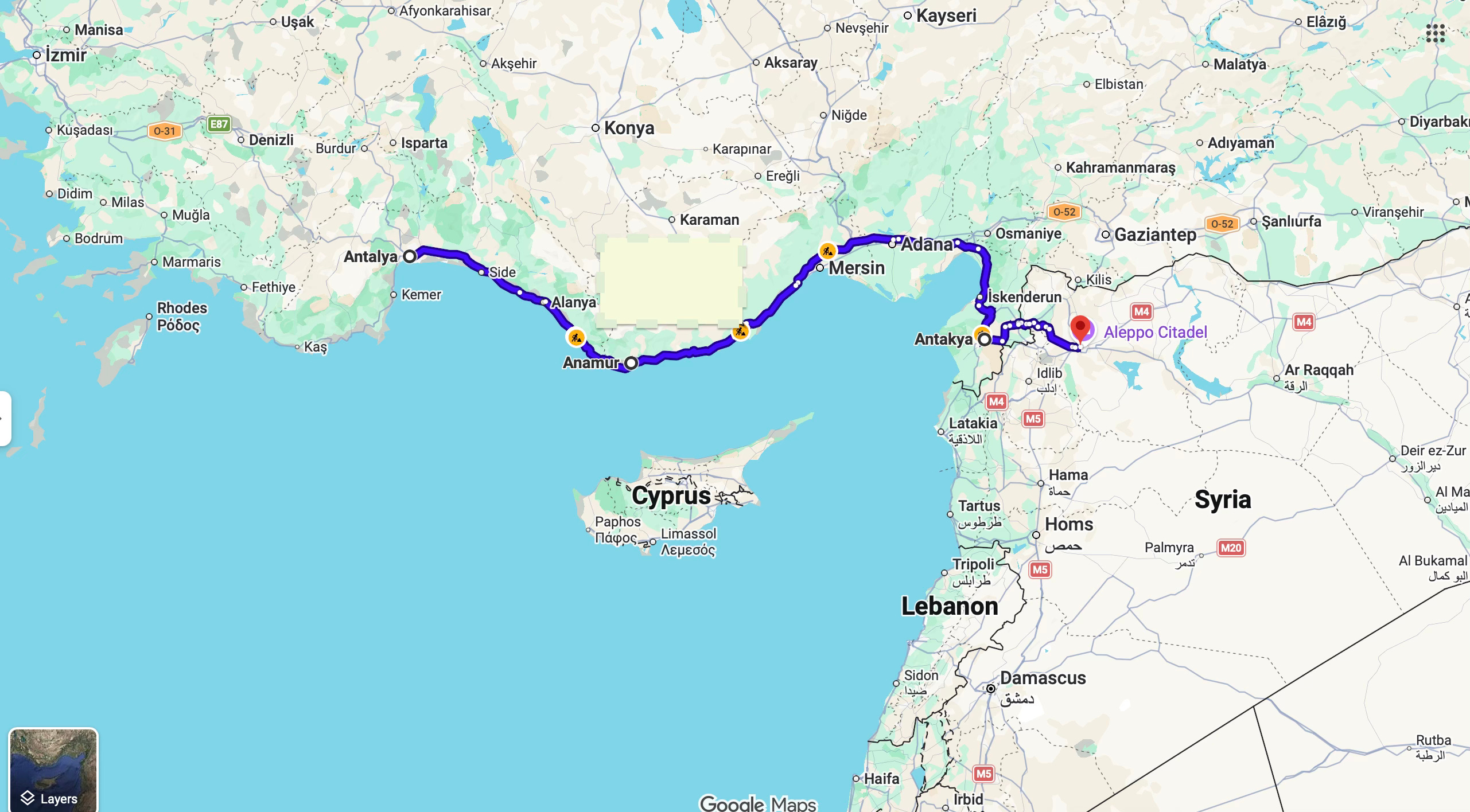
Antakya was hot, weather-beaten, dirty. I walked to the Has office to inquire about getting to Aleppo (Halab in Arabic, Halep in Turkish). After many "wait here”s, one man told me “yes, get a dolmuş-taxi to the frontier, then an Arab bus to Halep.”
Um, no way am I going to go alone to the border.
As I argued, my previous bus driver approached. He interjected something that seemed like “Come on, don’t make the poor girl go alone. Find a bus for her.” The man headed off. “Wait here.”
I didn’t wait there.
I spied another bus company sign, Pan. “Yes,” they went to Halep. “Go across the street to our other office.”
He pointed across the street.
I walked into a dingy, dark wooden room dominated by temporary beams that seemed to be all that held up the pockmarked ceiling and the 2nd floor. Between the beams, wooden benches. On the benches were the wildest looking people I had ever seen. Long robes of many layers, black and white, beards, sunken yellow eyes, scarves draped over their heads with black ropes denoting bedouin. Slouched low down, their glazed eyes showed no curiosity. They seemed weak, defeated. Flies buzzed.
The clerk nodded: “Yes” they had a bus to Aleppo that left at 13:00 and cost $9.00.
“Mersi. I will come back in 10 minutes.”
I hightailed it out of there. Nothing about that place felt safe.
I spied another bus company: Mas. Yes, they had a bus. “Come with me,” said a friendly man with a smile. And we shouldered past crowds of men to another little hole-in-the-wall waiting area: the Jet bus company.
I asked again, and eventually was understood. Nods all around. The bus they pointed to looked big and normal. I bought a ticket. I didn’t bargain.
Hungry, I searched for some food. Reluctant to sit alone on benches in a rundown kiosk, I bought a package of sweet crackers to take with me.
Next, water. I entered a restaurant and asked for su. They thought I meant “soup” and pointed at a pot.
No. Yok, su. Ahh. They held up a silver canteen of tap water.
No, I shook my head. As I walked away, a young man yelled “You want water?” I turned around.
He threw his water from a glass. Was he rude or was he offering his glass?
“No”. Then he held his hands one above the other to signify a bottle.
I nodded and he pointed me to a store that was very far away. I shook my head.
He pointed to a store in the other direction that was close. Mersi.
The clerk there eyed me and announced the price in German. I shook my head. He raised an eyebrow and wrote the number on a piece of paper, as if I were stupid for not understanding my own language’s numbers.
Finally I was back at the bus. Bus stations in Turkey back then were big parking lots crowded with lines of buses, taxis, dolmuş mini-busses and luggage. Clerks sat in one-story buildings, usually dark and dirty, behind counters. They often spoke some English. They had diagrams of the seats in front of them and marked off the assignments. I always had seat 17 for some reason.
Thankfully, the bathroom was clean, with soap. It was always a squat and pee type of toilet in public bathrooms. There was a water tap and canister with which to wash oneself instead of toilet paper. I hadn’t figured out the system, so I still used tiny bits of Kleenex.
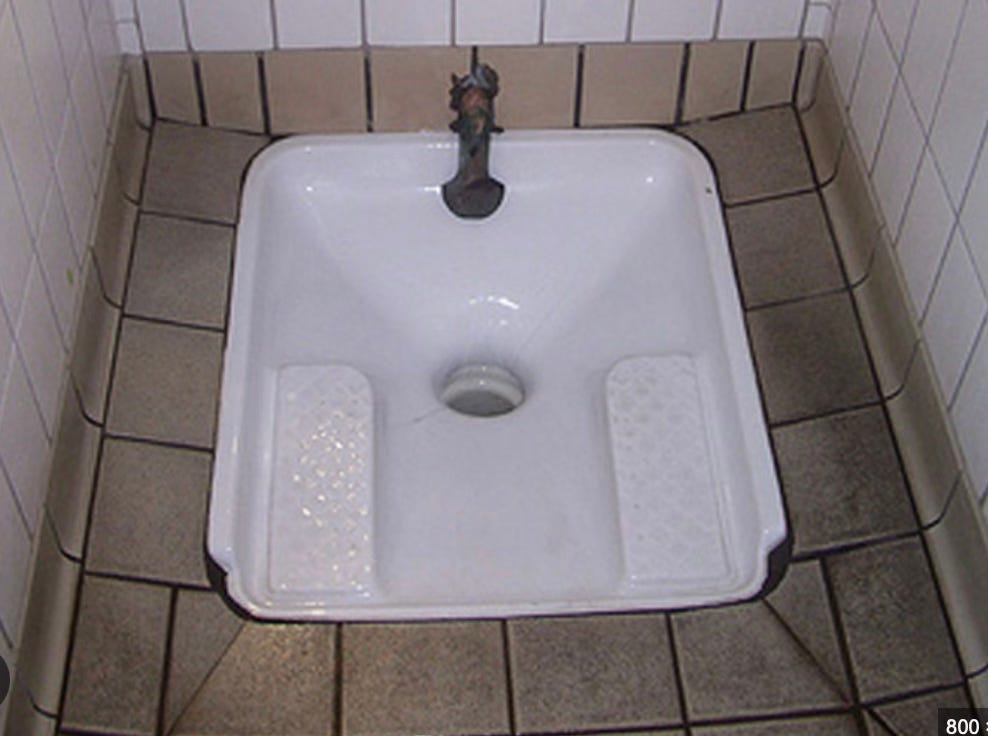
This morning, I had discovered I had my period. Women will understand. Menstruation makes things tricky. There is a reason men have been the traditional travelers. I had OBs with me but I’d never put one in from a fully squatted position. For good reason. Struggling, I settled on a compromise. It was very uncomfortable and with every step I worried it wouldn’t stay in place. I had black pants on, which was good. And I know I ended up fine. But when I reflect on that day, I realize how I should have done things differently. My inspirations back then were masculine, tough and unfazed by physical vulnerabilities. Now, I would have been more gentle with myself, avoided traveling while menstruating, to celebrate those days of the month rather than pretend they didn’t occur.
Back to the bus. My big pack was placed down in the bottom of the bus. Below my window, hot, fat, perspiring men yelled about the logistics of their luggage. They had bags of apples & oranges, crates of crackers and cookies, boxes of clothes, suitcases. Enough to move an entire household. The Tunisians near me explained in good English that the burdened passengers were Jordanians, probably importing goods to re-sell.
They laughed as I admitted I was nervous about Syria. Would there be tanks in the streets? Could I walk safely as an American? “It is VERY safe. Not as bad as Turkey. You can walk on the street at any time.”
Note to self: Turks I met were aghast that I would go to Syria. Syrians later were genuinely shocked when I said Turkey is a beautiful country with kind people. Propaganda and hearsay are everywhere. Travel helps.
We eventually came to a no-mans’ land, reminding me of images of WWI battlefields after trench skirmishes. A 10’ tall fence with a 2’ roll of barbed wire marked the long border. The driver collected our passports and we piled off the bus to stretch our legs. They called us one by one. I was “the American.” The official handed me my passport and we re-boarded the bus. Ten more kilometers of desert rock and partially constructed cement buildings, and we arrived at the Syrian border crossing. Flags were everywhere, along with benevolent, smiling pictures of Hafez al-Assad (Syria’s Alawite dictator until his death in 2000, when his son Bashar al-Assad took power).
The Syrians on the bus beckoned me confidently to follow them into a crowded room. Men were talking wildly or standing glumly in groups. A handsome man leaned against the counter, crotch sticking forward, Sticky Fingers style, and exhaled cigarette smoke in artful circles. At the counter, I was required to exchange $100 cash. The black market rate was 50% more. The young clerk took my travelers check slowly, rubbed the textured paper between his fingers, and put it aside until all the others had exchanged their cash. After filling out many extra cards, he gave me 825 Syrian pounds for $100.
“Why are you visiting?”
I was a student, I said, with what I hoped was an earnest expression.
“Where are you going?”
“To Aleppo and Damascus. I have heard they are beautiful cities.” Smile.
He considered.
“This is your first time to my country? Welcome.”
Aleppo. My Tunisian bus friends made a big show of finding me a taxi. They yelled into the crowded scene and held out their arms until a light blue car pulled up. They tossed my heavy pack onto the back seat and held open the passenger door for me. A split second’s hesitation told my gut this wasn’t a good idea. But it was done.
The taxi driver pulled up in front of an arched stone facade that for some reason reminded me of the Biltmore in New York. Relieved, I was prepared to splurge, to give myself a welcome start. I wondered if they took credit cards. I hopped out, shouldered my backpack, walked in, and asked for a room. The concierge looked me up and down. After a pause, “We are fully booked“ oozed down his nose. “So sorry,” he relished curtly.
Oops. I was incensed. My mother would have yelled at him.
I stormed out and we drove to another hotel, a little less stodgy. The Ramsis. No, they had no single rooms.
I walked down the street, now leaving my pack in the taxi. Yes, they had a room but I would have to pay in dollars. I had only travelers checks and Syrian pounds.
“Go across the street to the Granada hotel,” the clerk said. ”They will accept lira,” which is what the Syrians call their money.
No, they couldn’t give me a room either.
“Please, I just arrived. It is getting dark and I need a place to stay.”
“Sorry.”
I slumped back out to the taxi, apprehensive now. What was I going to do?
An elderly gentleman parted from his group near the counter (there are always older men sitting in public areas) and beckoned me back in. He asked in sign language (pointer fingers of two hands rubbing together) if it was true I was ‘with’ the taxi driver.
I frowned, shook my head, amazed and insulted. “No!”
The taxi driver saw this exchange, ran in and, maybe a little guilty, echoed he was only the driver.
Suddenly, as if a director had yelled ‘cut’ after a tense scene, everyone in the lobby relaxed. They talked and laughed. The clerk checked me in and showed me to a room, which was old, with hot water but no toilet paper.
A bit later, I tied a black scarf over my head, and went out to search for food before dark. The old gentleman in the lobby nodded approvingly as I passed. “Good.”
Grrr. His approval grated on my nerves but I knew the rule: When in another culture, do as they do.
I found overpriced almonds, pasty dry cookies and some oranges. I spied a pharmacy, and went in to ask for toilet paper or kleenex.
No, the pharmacist didn’t speak English.
Sigh. I prepared to mime what I needed.
“Italiano,” he said. I stepped back and smiled. Italy was my second home.
“Veramente?” Really?!
“Si trovano pocchi le fazzoletti qua,” he explained kindly in a perfect, refined northern Italian accent. There are few handkerchiefs to be found here.
I felt immediately at ease. Though I didn’t find any tissues, I was in the presence of the familiar.
It is a small world, after all.
Part 5, to be continued…
My last memory in Greece in 1997:
An American woman on the beach said:
“You can’t travel alone in Turkey.
You’re tall, blonde, American.”
The next morning I took the ferry to Turkey and stayed 7 weeks.
Best travel stories in my life happened there and
almost all of are untold.
Thanks for sharing yours!🫶🙏✍️
Brave woman !